Table of Contents
Treatment can not make all of life's challenges go away, yet it can aid you begin reacting to difficult individuals or scenarios in healthier, much more efficient means.
Advancement in treatment is constantly a favorable indicator. It suggests you're enhancing and moving on, and it declares that you're being sustained where you are now, not where you were when you began. Attaining your preliminary objectives and setting new ones with your therapist shows true momentum in your recovery journey.

Development in therapy is seldom, if ever, linear. This implies points won't always happen in a straight line or in a foreseeable way. You could have troubles, regressions, or challenging moments along the road, yet it is necessary to keep in mind that these belong to the procedure, not a sign of failing.
Are you thinking about therapy yet are unclear just how often you should go to sessions? In this post, we will explore the inquiry: Just how frequently should you go to treatment sessions?
Apprehension Solutions That Transforms Lives
The factor is easy: treatment is a practice. Just like reflection, yoga, workout, writing, or any type of various other practice, it needs uniformity of immersion with a lot of method to find out and internalize the technique.
This will encourage you to make options that feel like your selections (not simply adjustments to the demands of other individuals). As you find out to determine and navigate the complexities of your interior world with of treatment, you will find better authenticity and creative thinking in job and in your partnerships.
We urge you to speak with among our specialists to identify the best frequency for you. It is additionally essential to acknowledge that, in situations of monetary hardship, a number of our therapists can and will certainly suit a lower regularity of therapy. Our company believe that it is necessary to meet you where you are and to relocate at the speed you determine, as you embark on this profound journey.
Lots of people go to treatment as soon as a week, and some may also go two times a week if they are handling intense distress or have extensive therapy goals. As they progress, these sessions might become less regular. For those with less pressing concerns that only go to counseling for continuous upkeep, bi-weekly and monthly sessions are sufficient.
Tailored Therapy for perfectionism Care
There isn't just one element determining the variety of times one need to most likely to treatment, but various aspects that contribute in figuring out treatment regularity. These factors can be internal (personal struggles, motivations, etc) and exterior (restorative aspects). By comprehending these variables, you will certainly recognize why your therapist produces a certain timetable and why that timetable is most suited to your healing trip.
In such situations, twice-weekly sessions might be called for. Satisfying the specialist more often in the beginning of therapy is frequently advised. It might be on a regular or once every two weeks basis, and the factor for this is easy: the much more you meet the specialist, the sooner the healing bond can be established.
Anxious Feelings Won't Always Control Your Path
The regularity of treatment sessions also comes down to what therapies are being used. Different therapy approaches have various session regularity recommendations due to the fact that some can be extensive while others may not be. Psychoanalysis normally needs several sessions a week, while psychodynamic therapy (what we offer at Deepness Therapy) may require just weekly sessions.

Your budget plan, job schedule, individual accessibility, and the distance between your home and the center should all be gone over with your specialist. This is essential for setting a treatment routine that maintains you committed without including any type of excessive anxiety. No matter the mental health and wellness problem, going to weekly therapy sessions can be beneficial for all those who on a regular basis go to treatment.
What Generates Quality Depression Therapy
When therapy sessions are set up at an established interval, it enables you and the specialist to establish a stronger partnership, which, subsequently, produces better trust fund in much less time. This develops a safe room where you can process and review your experiences, thoughts, and sensations with your therapist so that they can obtain understanding right into your struggles.
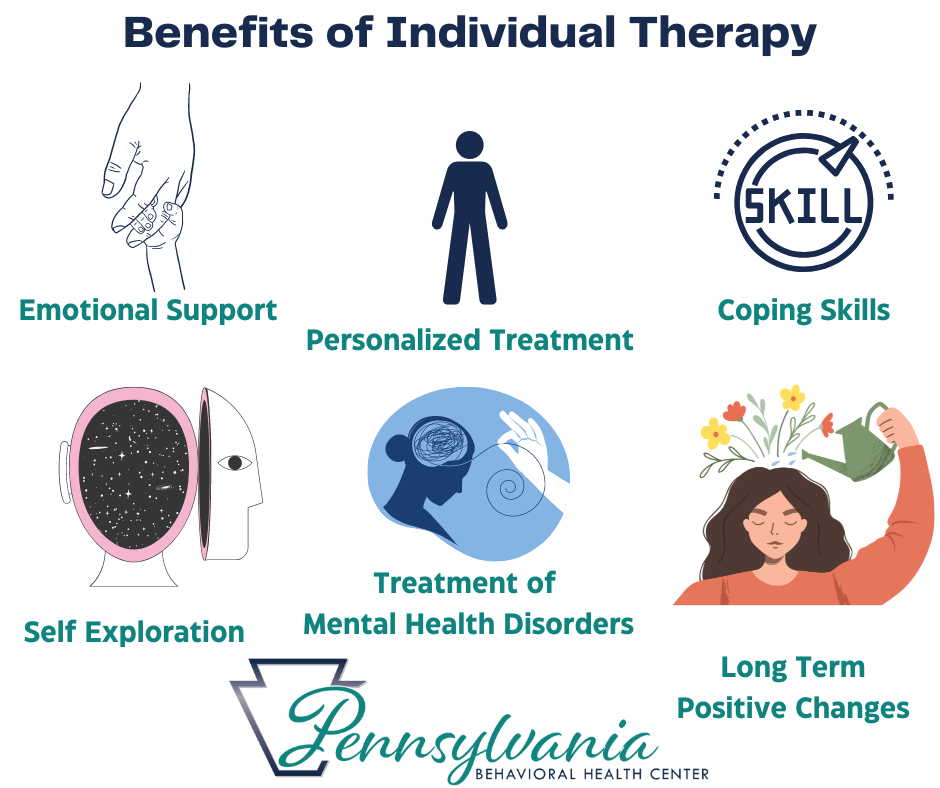
As you fulfill your specialist more often, the probability of issues going unaddressed, nevertheless small, is low. With consistent regular follow-ups, the specialist can review the progress made and strengthen coping devices and new discoverings regarded required for causing enduring adjustments. A therapistclient partnership is founded on count on, and without routine meetings, it can be challenging to build that trust fund.
Dedicating Time in Your Happiness
When you really feel recognized and unconditionally supported, you can share your thoughts, feelings, and has a hard time without booking. For intimate conversations to move openly, it is very important to have a helpful setting where personal expression is not suppressed by judgment. One means to produce such a risk-free space is to satisfy your therapist on a regular basis to review your worries and discover resolutions while devoted to you.
It is an essential part of psychological healthcare that can have an extensive effect on a person's total well-being. Determining will be needed is a recurring procedure that may call for adjustments along the way. It is crucial to focus on indications that suggest the demand to increase or reduce the.
Review your interest in your specialist and discover the opportunity of even more extensive therapy. If you discover yourself experiencing raised distress, increased signs, or a worsening of your psychological health and wellness problem, it might show the demand for even more frequent therapy sessions. Connect these changes to your therapist so that they can readjust your therapy plan as necessary.

Navigation
Latest Posts
Body-Based Therapy for Traumatic Stress
IFS Therapy across Multilingual Therapy
Individual Care for Individual Particular Journey