Table of Contents
He suggested that alcohol addiction was not simply a physical food craving for alcohol, but additionally a deeper spiritual yearning and a mental disconnection from the self and others. He suggested that real healing needed not just abstaining from alcohol, yet likewise a spiritual awakening, a reconnection with the self, and a transformation of one's internal being.
He expressed his support for the spiritual and mental principles of AA and his hope that his understandings would add to the understanding and therapy of alcohol addiction. Jung's letter to Costs W had a profound influence on the advancement of AA and its 12-step program. It assisted strengthen the spiritual and emotional elements of AA's strategy to recovery, and it proceeds to be taken into consideration an essential historical paper in the area of dependency treatment.
What Patients Often Misunderstand About Image Transformation therapy
In AA, this concept is used to attach recuperating alcoholics with a neighborhood of people who have actually experienced comparable struggles, and it gives a source of assistance and understanding. In enhancement, Jung's principle of the "archetype" has actually been integrated into the AA program. The archetype is an universal symbol or pattern that exists in the collective subconscious and shows the basic qualities of human experience.
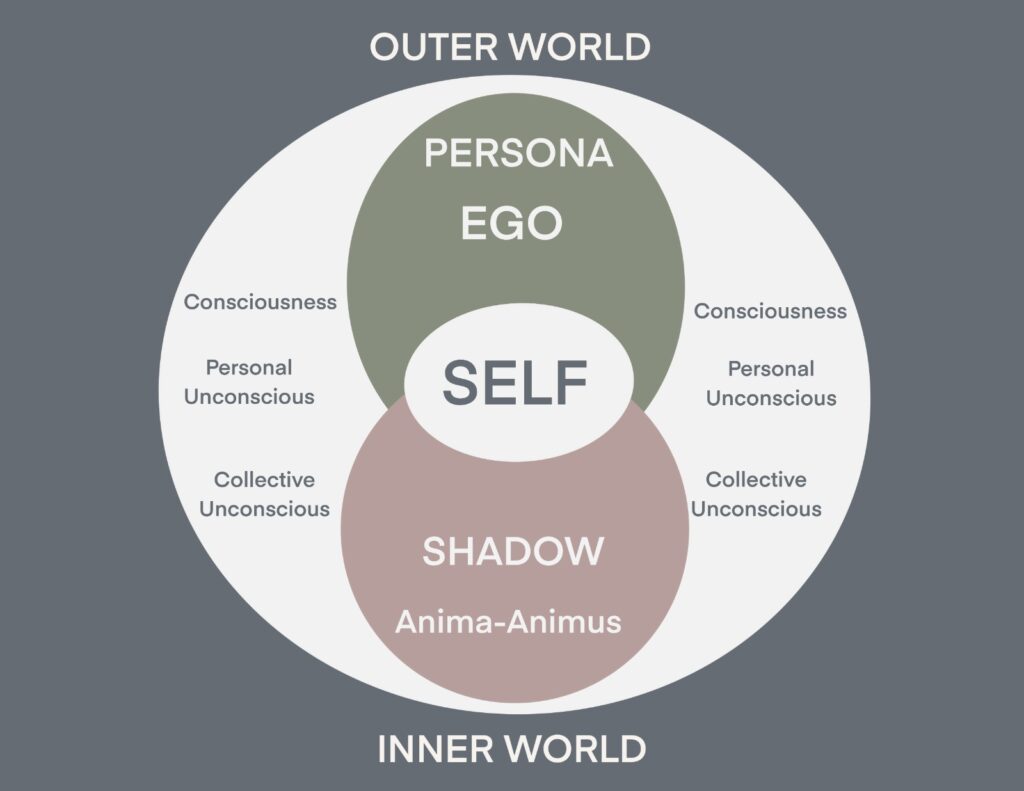
His ideas remain to shape our understanding of the human mind and influence. Edward Edinger, a popular Jungian expert, increased on Jung's theory of the ego-self axis. He said that the vanity's primary role was to offer the self, which he viewed as a magnificent force that was above any type of individual.
We can observe the idea of the ego-self axis in culture in several means. In literary works and art, we see characters battling to integrate their conscious and subconscious selves, such as in the jobs of James Joyce or Virginia Woolf.
Innovations in Image Transformation therapy in Dalkey, Ireland
According to Campbell, the hero's trip is composed of several stages, including the call to adventure, going across the limit, encountering tests and tribulations, and inevitably attaining an objective or advantage. Campbell argued that by recognizing the hero's journey, we could get a deeper understanding of ourselves and our location worldwide.
Campbell believed that misconceptions were not just tales, yet additionally expressions of the collective unconscious. He suggested that misconceptions offer to connect the private with the global human experience and provide a way to access the much deeper elements of our mind. Campbell's map for mythology has actually had a profound influence on prominent society, along with the study of folklore and religion.
Here are the major assumptions of the MBTI: The MBTI thinks that character is inherent to individuals and is shaped by their inherent attributes, preferences, and tendencies. It suggests that individuals are born with specific predispositions in the direction of specific mindsets, feeling, and acting, which stay fairly stable throughout their lives.
introversion (I), sensing (S) vs. intuition (N), reasoning (T) vs. sensation (F), and judging (J) vs. perceiving (P). This brings about the identification of 16 feasible individuality kinds based upon the combinations of these preferences. The MBTI recommends that each character kind has unique strengths and constraints, and no person kind is inherently better or worse than another.
The Foundation for Successful Trauma Therapy
The MBTI presumes that individuals adapt their individuality actions based on the demands of the atmosphere and the situation they remain in. It recommends that people might display different behaviors and choices in various scenarios, which can be influenced by elements such as childhood, society, and life experiences. The MBTI suggests that an individual's character type affects their actions, decision-making, and interaction designs.
The MBTI is typically provided through a set of questions or analysis that asks individuals to suggest their preferences on a series of statements or concerns associated to the 4 dichotomous sets of individuality dimensions (extraversion vs. introversion, sensing vs. instinct, believing vs. feeling, and evaluating vs. regarding). Based upon their responses, people are assigned a four-letter code that represents their MBTI type.
Why Therapy and Medication Work Together for Anxiety in Dalkey, Ireland
introversion (I), sensing (S) vs. intuition (N), thinking (T) vs. sensation (F), and judging (J) vs. viewing (P). Right here is a summary of the eight function enters the MBTI: Individuals with a preference for Te often tend to concentrate on sensible thinking, unbiased analysis, and useful decision-making. They are typically crucial, reliable, and assertive in their approach to analytic and decision-making.
Individuals with a choice for Ti tend to focus on logical analysis, important reasoning, and developing interior frameworks for understanding the world. They are often reflective, exact, and analytical in their reasoning, and might excel in functions that need extensive evaluation, analytical, and conceptual understanding. Individuals with a choice for Fe often tend to concentrate on building unified partnerships, understanding with others, and keeping social consistency.

Table of Contents
Latest Posts
Discovering the Right Mental Health Support: A Comprehensive Take A Look At Stress And Anxiety, Clinical Depression, and Trauma Treatment Alternatives
Present-Moment Exercises: Using Into Your Routine
Healing Secondary Trauma
Navigation
Latest Posts
Present-Moment Exercises: Using Into Your Routine
Healing Secondary Trauma